

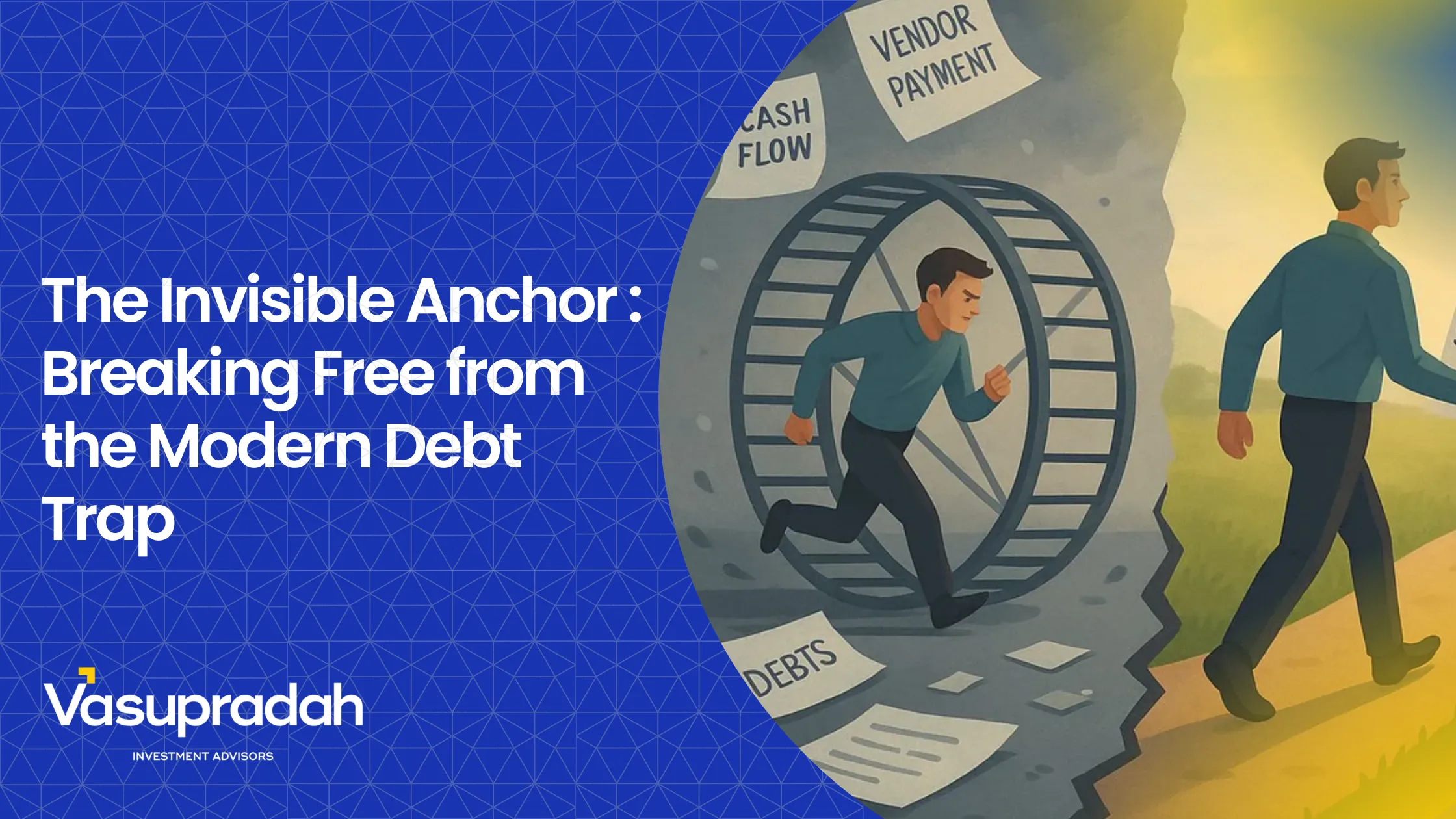
As equity advisors, our primary focus is usually on identifying growth, managing risk, and helping your capital compound over time. However, before wealth can truly grow, we must address the single biggest destroyer of compounding: high-cost consumer debt.
We are currently observing a concerning trend, particularly among young professionals and Gen Z earners entering the workforce. The friction of borrowing has completely vanished. Where loans once required collateral and mountains of paperwork, credit is now available at the tap of a screen.
Driven by the FOMO (Fear Of Missing Out) generated by curated social media lifestyles, and the deceptive ease of BNPL (Buy Now, Pay Later) schemes, many investors are inadvertently building a liability portfolio before they even start their asset portfolio.
The Illusion of Affordability
The modern debt trap rarely announces itself. It creeps in disguised as convenience. You might not have a massive, singular loan, but rather a web of micro-liabilities. It is critical to recognize the warning signs before they compromise your financial foundation:
- • The Minimum Due Mirage: Regularly paying only the minimum amount on credit cards. This is a mathematical trap that compounds interest against you at alarming rates.
- • Funding Consumption with Credit: Using personal loans or credit cards to fund basic lifestyle needs, travel, or depreciating assets like electronics, rather than using them strictly for convenience and clearing the balance monthly.
- • The Debt Overlap: Juggling multiple lines of credit—a personal loan here, a digital app loan there, and maxed-out credit cards—to the point where you lose track of your total outstanding principal.
- • Breaching the Safety Ratio: If your Fixed Obligation to Income Ratio (FOIR)—the percentage of your monthly salary that goes strictly toward EMIs and mandatory debt repayments—crosses 40-50%, your financial flexibility is severely compromised.
The Advisor’s Blueprint for Debt Elimination
If you find yourself caught in this cycle, the stress can lead to “doom spending”—ignoring the problem and continuing to spend for short-term relief. As wealth managers, we advise a strictly analytical, emotion-free approach to debt elimination:
- Conduct a Ruthless Liability Audit: You cannot fix what you do not measure. Map out every single debt you hold, noting the outstanding principal and the exact interest rate. Immediately freeze all new discretionary borrowing.
- Deploy a Targeted Repayment Strategy:
- The Avalanche Method (Mathematically Optimal): Direct all surplus cash flow toward the debt with the highest interest rate (usually credit cards or instant digital loans), while maintaining minimum payments on the rest. This stops the most aggressive wealth-drain first.
- The Snowball Method (Psychologically Effective): Clear the smallest debt balances first. The psychological victory of closing an account can provide the momentum needed to tackle larger loans.
- Restructure and Consolidate: If you are managing multiple high-interest unsecured loans, look into consolidating them into a single, lower-interest facility. The goal is to reduce your blended interest rate and simplify your cash outflow.
The Ultimate Shift: Build Assets, Not Liabilities
Albert Einstein famously said, “Compound interest is the eighth wonder of the world. He who understands it, earns it… he who doesn’t… pays it.”
When you are stuck in a debt trap, you are on the wrong side of that equation—you are paying it. Escaping the debt trap is just the first phase; the ultimate objective is to aggressively flip that math in your favor. It is high time to stop funding depreciating liabilities and start accumulating appreciating assets.
Every EMI you eliminate unlocks capital that can be put to work in the equity markets. Instead of paying 30% to 40% annualized interest to a digital lender, that same capital could be deployed systematically:
- • For steady compounding: Capital can be directed into low-risk portfolios consisting of high-quality blue chips, established private banks, and capital market infrastructure leaders.
- • For aggressive growth: Freed-up funds can be allocated to medium-to-high risk strategies focusing on sector leaders in specialized manufacturing, defense, and fast-growing digital platforms.
At Vasupradah Investment Advisory Services, we believe that true financial freedom is built on a foundation of discipline. Escaping the debt trap requires a fundamental shift in mindset: moving away from instant digital gratification and toward the patient, rewarding journey of long-term compounding.